A nonpartisan public education resource from the Water Alliance of La Paz County
Water is one of the most important issues facing La Paz County and rural Arizona. During the 2026 election season, many candidates have made public statements about groundwater, water transfers, data centers, development, agriculture, wastewater, and the authority of different public offices.
How to Read This Page
The Water Alliance of La Paz County is a nonpartisan organization. We do not support or oppose candidates for public office. This page does not rank candidates, compare candidates, rate candidates, or tell voters how to vote.
Instead, this page provides:
- Water-related statements found in reviewed public materials
- Basic explanations of what different offices can and cannot do
- Public-record context for major water topics raised during the campaign
- Source notes for readers who want to look deeper
Statements are paraphrased unless quotation marks are used.
- This page is not a candidate scorecard, does not serve as endorsement, approval, or disapproval of any candidate.
- The inclusion or exclusion of a candidate in this log is not a statement of approval or disapproval. Some candidates may not be included because no water related statements could be found in reviewed Meet and Greet transcripts.
- A longer entry does not mean a candidate is better or worse on water. It may only mean that more water-related statements were found in the reviewed materials.
- A shorter entry does not mean a candidate does not care about water. It may only mean that fewer water-related statements were located in the source materials reviewed by the Water Alliance.
- Readers are encouraged to review the original sources, ask candidates follow-up questions, and check official public records.
JUMP TO
Key Water Facts | Major Water Topics Raised by Candidates | Water Policy Ecosystem: Who Does What? | Candidate Statement Source Log | Suggested Questions for Voters to Ask Candidates | Source Notes
Key Water Facts
No single office controls Arizona water policy
Arizona water policy is shaped by the Legislature, Governor, state agencies, the Arizona Corporation Commission, counties, cities, towns, courts, and voters.
State legislators can introduce and vote on water bills. The Governor can sign or veto bills and oversee executive agencies. ADWR manages major groundwater programs, including Active Management Areas. Local governments can influence zoning, development review, municipal water service, wastewater systems, and local infrastructure.
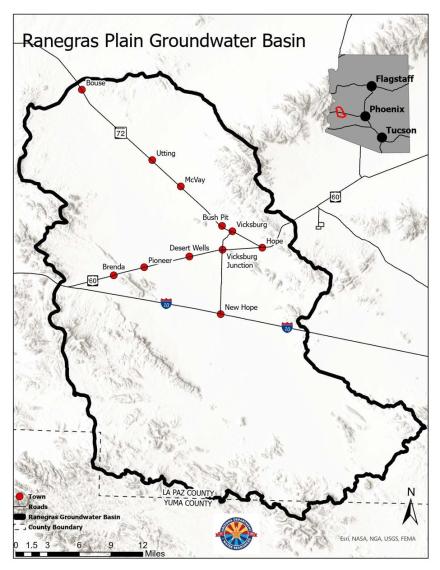
The Ranegras Plain Groundwater Basin is now an Active Management Area
ADWR designated the Ranegras Plain Groundwater Basin as an Active Management Area in January 2026. ADWR stated that groundwater withdrawals have outpaced natural recharge by roughly 900 percent and that one well in the basin has declined more than 240 feet since the 1980s. (Arizona Department of Water Resources). An AMA gives local residents and water users a structured way to help shape groundwater rules, while the state retains final decision-making authority.
Claims about “800 years of water” need documentation.
Public statements have referenced claims that Quartzsite or La Paz County has “800 years” of water. The Water Alliance has not independently verified that claim. A meaningful review would require the source study and its assumptions, including pumping levels, recharge, well depth, water quality, population growth, drought conditions, industrial demand, and legal availability.
The Arizona Corporation Commission regulates some private water utilities, not all groundwater
The Arizona Corporation Commission maintains regulatory authority over private water companies and private wastewater companies. Municipal water and wastewater systems are generally regulated by the city or state, not the ACC. (Prod 15.3.8521)
Data centers can raise water and energy questions
Data center water use depends on the type of cooling system, local climate, energy source, and whether water is reused. Lawrence Berkeley National Laboratory notes that data center water use is often tied to cooling needs, and DOE identifies cooling towers as water-intensive applications in some data centers. (Data Center Efficiency)
Town councils do not make statewide groundwater law, but they still matter.
Town councils can influence local zoning, development review, municipal water and wastewater systems, land-use decisions, infrastructure planning, and public review of proposed projects. These local decisions can affect how water-related concerns are handled in a community.
Major Water Topics Raised by Candidates
Ranegras Plain AMA
Main point:
The Ranegras Plain Groundwater Basin is now regulated as an Active Management Area.
Why this matters:
Many candidates and residents discussed groundwater decline, local input, rural groundwater management, and the need for better oversight. The Ranegras Plain AMA is directly relevant to those concerns.
Read more:
ADWR says the Ranegras Plain AMA is intended to support the long-term economy and welfare of local water users in the basin by reducing groundwater overdraft. In March 2026, ADWR proposed a preliminary draft management goal to reduce groundwater overdraft by 50 percent in 50 years. (https://www.azwater.gov/ranegras-plain-active-management-area) An AMA gives local residents and water users a structured way to help shape groundwater rules, while the state retains final decision-making authority.
HB 2758 and McMullen Valley Groundwater Transfers
Main point:
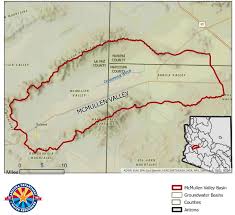
HB 2758 dealt with groundwater transportation from the McMullen Valley Groundwater Basin.
Why this matters:
Several candidates and residents discussed rural groundwater transfers and whether water from rural basins should be moved to other parts of Arizona.
Read more:
ADWR’s 2026 legislative summary describes HB 2758 as a bill that would have repealed existing statutory restrictions on groundwater transportation from the McMullen Valley Groundwater Basin and create a new framework allowing eligible public entities and regulated water utilities to withdraw and transport groundwater from historically irrigated acres under specified limits, reporting rules, and cost-responsibility conditions. (Arizona Department of Water Resources). This bill stalled in session and could be re-introduced in the future.

Data Centers, Water Use, and Desalination
Main point:
Several candidates discussed data centers, especially their water and electricity needs.
Why this matters:
Data centers may use water directly for cooling and indirectly through the electricity needed to operate them. The amount of water used depends heavily on the facility design.
Read more:
Lawrence Berkeley National Laboratory notes that data center water efficiency is often overlooked and that water consumption is usually connected to cooling needs. DOE also identifies cooling towers in some data centers as water-intensive applications. (Data Center Efficiency)

Quartzsite Growth, Water, and Wastewater
Main point:
Town growth questions often connect to water supply, wastewater capacity, land use, and infrastructure.
Why this matters:
Town council candidates discussed business growth, housing, wastewater, data centers, water supply claims, and proposed industrial projects. While town councils do not create statewide groundwater law, they can affect local development review and infrastructure planning.

Arizona Attorney General Authority
Main point:
The Arizona Attorney General does not directly manage groundwater, but the office may be relevant when legal violations, consumer protection, open meeting law, public bodies, environmental enforcement, or agency representation are involved.
Why this matters:
Attorney General candidates were asked about local concerns, including whether the AG could help stop a proposed refinery. The answer depends on what law applies and whether a violation can be shown.
Read more:
The Arizona Attorney General’s Office states that it is authorized by statute to investigate and resolve allegations that public bodies have violated the Open Meeting Law. (Azag)
Water Policy Ecosystem: Who Does What?

Arizona’s Legislature writes and votes on laws. State legislators may introduce, debate, amend, and vote on bills related to groundwater, water transfers, conservation programs, water infrastructure funding, agency authority, data requirements, and state budgets.
One legislator cannot enact water policy alone. Most bills must move through the legislative process, pass both chambers, and be signed by the Governor or otherwise become law.
The Governor is Arizona’s chief executive. The Governor can influence water policy by signing or vetoing bills, proposing budgets, issuing executive orders, making appointments, and overseeing executive-branch agencies.
The Governor also plays a role in agency leadership and implementation of state water laws.
ADWR is not an elected office, but it is central to Arizona water management. ADWR administers major groundwater programs, including Active Management Areas. It also collects water data, implements groundwater rules, supports planning, and works with local stakeholders in regulated areas.
The Arizona Corporation Commission maintains regulatory authority over private water companies and private wastewater companies. It can affect private water company rates, service quality, utility infrastructure, and some utility-related questions connected to large users.
The ACC does not manage all groundwater policy in Arizona. Municipal water and wastewater systems are generally regulated by the state. (Prod 15.3.8521)
Local governments can affect water-related decisions through zoning, development review, land-use decisions, local ordinances, municipal water systems, wastewater systems, infrastructure planning, and public hearings.
Town councils do not create statewide groundwater law, but their decisions can still shape how growth and water-related issues are reviewed locally.
The Attorney General is the state’s chief legal officer. The office may become involved in legal enforcement, consumer protection, public body compliance, agency representation, lawsuits, and some environmental or public-record matters.
The Attorney General does not directly manage groundwater pumping, create local zoning rules, or approve water transfers. Those responsibilities usually belong to other offices or agencies.
The County Assessor’s role is property assessment. The office locates, identifies, and values taxable property and maintains property records.
The County Assessor does not create state water law, regulate groundwater pumping, or approve water transfers.
The Secretary of State does not manage groundwater, regulate utilities, or vote on water legislation as part of the office’s normal duties.
The office can still be relevant to water policy because the Secretary of State handles statewide initiatives, referenda, and election processes. If a water-related ballot measure is filed, the Secretary of State’s responsibilities may become part of that process.
Candidate Statement Source Log
The following section lists water-related statements found in reviewed public materials. It does not evaluate whether a candidate’s position is good or bad. It simply records what was found.
The reviewed materials include:
- June 15, 2026 Meet the Candidates transcript
- June 22, 2026 LD30 debate transcript
- June 22, 2026 Quartzsite Meet the Candidates transcript
- June 30, 2026 Quartzsite Meet the Candidates transcript
- July 6, 2026 Quartzsite Meet the Candidates transcript
- Candidate radio interview transcripts
- Candidate campaign or official web platform language
- Public agency and legislative records used for context
Paul Gosar
Main point:
A representative speaking on behalf of Congressman Paul Gosar discussed the need to keep fighting for water and to look for new water sources.
Source-log details:
At the June 30 Quartzsite Meet the Candidates event, Gosar’s representative said Arizona must continue fighting for water and not only focus on existing water allocations. She said Arizona also needs to find new water, including desalination, and reduce red tape that can delay projects for 10 to 15 years.
Context note:
This statement was made by a representative speaking on Gosar’s behalf, not by Gosar directly at the event.
Main point:
Gannuscio has made several statements opposing rural-to-urban water transfers and calling for Maricopa County to develop more of its own water solutions.
Source-log details:
Gannuscio said he does not support sending water resources overseas and does not support groundwater measures that harm agriculture. He said Maricopa County should develop its own desalination and recharge system so it does not rely on rural water.
In a radio interview, Gannuscio discussed foreign agricultural leases, including Fondomonte, and said he does not support foreign entities growing crops with local water and shipping the product out of the country.
When asked about HB 2758 after it was explained to him, Gannuscio said he would “absolutely oppose it.” He later said he is “not a fan of water transfers” and does not want river water or rural water moved to Maricopa.
Public-record context note:
Gannuscio’s statements raise several water-policy issues: rural-to-urban groundwater transfers, agricultural water use, foreign-owned agriculture, desalination, and groundwater recharge.
What public records show:
HB 2758 is directly relevant to statements about moving rural groundwater. ADWR’s 2026 legislative summary describes HB 2758 as a bill that would have repealed existing statutory restrictions on groundwater transportation from the McMullen Valley Groundwater Basin and create a new framework allowing eligible public entities and regulated water utilities to withdraw and transport groundwater from historically irrigated acres under specified hydrologic limits, reporting requirements, and cost-responsibility conditions. ADWR states that the bill would authorize transportation to an initial Active Management Area or limited use in La Paz County. (Arizona Department of Water Resources)
The Arizona Legislature’s Senate fact sheet similarly describes HB 2758 as allowing an eligible entity that owns historically irrigated acres in the McMullen Valley Groundwater Basin to withdraw groundwater for transportation to a location and for prescribed purposes, subject to conditions. (Arizona Legislature)
Public records also confirm that Fondomonte has been the subject of state action. The Governor’s Office stated in March 2024 that Fondomonte was no longer irrigating on its Butler Valley leases after state lease cancellation and nonrenewal actions. (Arizona Governor’s Office) The Arizona Attorney General’s Office has also described an ongoing public nuisance lawsuit against Fondomonte related to alleged excessive groundwater pumping in the Ranegras Plain Basin. (Azag)
Desalination and recharge are real water-management tools, but they require specific water sources, infrastructure, permits, financing, and legal authority. ADWR notes that Arizona has been studying desalinated brackish groundwater as a possible way to augment limited water supplies. (Arizona Department of Water Resources) ADWR also administers recharge-related permits, including recovery well permits that allow stored water or long-term storage credits to be recovered under specified conditions. (Arizona Department of Water Resources)
What remains unclear:
Gannuscio’s statements clearly oppose rural water transfers to Maricopa and support desalination and recharge as alternatives. The reviewed statements do not identify a specific desalination source, project location, funding plan, pipeline route, permitting pathway, or timeline. They also do not explain how agricultural groundwater reductions, if any, would be balanced with residential, municipal, or industrial water needs.
Why it matters for water policy:
This distinction matters because opposing a water transfer and building a replacement water supply are separate policy questions. HB 2758 concerns whether groundwater from McMullen Valley could be transported under a new legal framework. Desalination and recharge could be part of a long-term solution, but they would require major planning, legal authority, infrastructure, and funding before they could reduce pressure on rural groundwater basins.
Main point:
Hecht has emphasized local control, rural groundwater management, and limits on groundwater use by out-of-state or foreign interests.
Source-log details:
Hecht supported limiting groundwater pumping by out-of-state interests such as Fondomonte and supported giving local governments more authority over groundwater use.
She said she opposed using local water to grow crops that are then sold outside the country. She also said older data centers used “a ton of water” and that the area does not have water to give to massive projects.
Hecht described “local control” as rural groundwater management rather than a state-run AMA or INA model. She said local committees should include people from affected communities.
Public-record context note:
Hecht’s statements raise several separate water-policy issues: local input in groundwater management, limits on large groundwater users, foreign or out-of-state agricultural water use, and data centers.
What public records show:
Arizona’s existing Active Management Area system is a state-administered groundwater management structure. ADWR says AMAs are groundwater basins subject to statutory and administrative rules for groundwater withdrawal and use. ADWR currently lists eight AMAs, including Ranegras Plain. (Arizona Department of Water Resources)
AMAs do include a formal advisory role for groundwater users. ADWR says each AMA has a five-member, Governor-appointed Groundwater Users Advisory Council that advises the AMA director and comments on draft management plans. (Arizona Department of Water Resources)
For the Ranegras Plain AMA, ADWR has held public meetings and invited public comments. ADWR’s proposed draft management goal is to reduce groundwater overdraft by 50 percent in 50 years. (Arizona Department of Water Resources)
Public records also confirm that Fondomonte has been the subject of official state action. The Governor’s Office stated in 2024 that Fondomonte was no longer irrigating on its Butler Valley leases after state lease cancellation and nonrenewal actions. (Arizona Governor’s Office) The Arizona Attorney General’s Office has also described an ongoing public nuisance lawsuit against Fondomonte related to alleged excessive groundwater pumping in the Ranegras Plain Basin. (Azag)
On data centers, federal energy sources confirm that some cooling systems can use large amounts of water. The U.S. Department of Energy says cooling tower systems use extensive water because heat is removed through evaporation, and that this demand can be especially high for constant cooling loads such as data centers. (The Department of Energy’s Energy.gov) DOE also reported that data centers used about 4.4 percent of total U.S. electricity in 2023 and could rise to about 6.7 to 12 percent by 2028. (The Department of Energy’s Energy.gov)
What remains unclear:
Hecht’s statement about “rural groundwater management” describes a local-control approach, but does not identify the specific bill language, legal structure, appointment process, enforcement authority, or funding mechanism that would create those local committees. Existing AMAs provide local input through advisory councils and public comment, though they are still administered through state groundwater law and ADWR.
Why it matters for water policy:
This distinction matters because “local input” and “local control” are not the same thing. A state-run AMA can include public meetings, advisory councils, and stakeholder input, but final authority still comes from state law and ADWR. A separate rural groundwater management model with local committees would likely require specific legislation or another formal legal framework.
Main point:
Lopez-Rajaniemi has described water as essential to the region and has called for conservation, preservation, and keeping local water local.
Source-log details:
At the June 22 LD30 debate, Lopez-Rajaniemi described water as the “lifeblood” of the region and said Arizona needs more conservation and preservation.
She said she has been visiting cities and towns to learn about different water issues, including Colorado River water, groundwater basins, and aquifers. She named noxious plants and desalination as possible parts of a broader water solution.
She also said no more water should leave the area and criticized foreign companies leasing land, growing crops, and using water-intensive agriculture.
Public-record context note:
Lopez-Rajaniemi’s statements raise several water-policy issues: water conservation, keeping local water local, agricultural water use, desalination, and vegetation management.
What public records show:
ADWR identifies irrigated agriculture as the largest water-use sector in Arizona, consuming about 74 percent of the state’s available water supply. That makes agricultural water use a major part of any discussion about conservation, preservation, and long-term water planning. (Arizona Department of Water Resources)
Public records also confirm that Fondomonte has been the subject of state action. The Governor’s Office stated in March 2024 that Fondomonte was no longer irrigating on its Butler Valley leases after lease cancellation and nonrenewal actions. (Arizona Governor’s Office) The Arizona Attorney General’s Office has also described an ongoing public nuisance lawsuit against Fondomonte related to alleged excessive groundwater pumping in the Ranegras Plain Basin. (Azag)
Desalination is also an active public-policy topic in Arizona. ADWR says there has been renewed interest in desalinated brackish groundwater as a way to augment Arizona’s limited water supplies, and the Legislature funded ADWR to prepare an updated inventory of brackish groundwater in the state. (Arizona Department of Water Resources) ADWR’s legislative materials also reference a feasibility study for potential brackish groundwater desalination project sites, including Ranegras Plain. (Arizona Department of Water Resources)
Lopez-Rajaniemi also mentioned noxious plants as part of a possible water solution. Public sources do recognize some invasive plants as water-related concerns. ADWR has referenced federal study efforts on water-intensive invasive species such as tamarisk, also known as salt cedar. (Arizona Department of Water Resources)
What remains unclear:
Lopez-Rajaniemi’s statements identify broad water priorities, but the reviewed materials do not include a specific conservation plan, desalination project, funding source, legal mechanism, or definition of what “keeping local water local” would mean in statute. Her comments about noxious plants also do not identify which plants, where they would be managed, who would manage them, or how much water savings would be expected.
Why it matters for water policy:
Conservation, agriculture, desalination, and vegetation management can all be part of water planning, but each requires specific details before the public can evaluate its impact. General support for conservation or desalination does not automatically show how much water would be saved, where new water would come from, how much it would cost, or whether it would reduce pressure on local groundwater basins.
Main point:
McMahan’s public materials identify water rights protection as a priority and propose exploring nontraditional water options.
Source-log details:
McMahan’s campaign site lists “Water Rights and Protections” among the items he intends to work on if elected. In the VOTE411 candidate guide, he lists “Water rights protection” as one of his three public policy priorities.
In response to a water-policy question, McMahan said Arizona should look at nontraditional options, including paying California cities to build desalination plants and purchasing their share of Colorado River water as a starting point.
On data centers, McMahan said he supports them only if they are 100 percent self-sustaining, including providing their own power and water onsite.
Public-record context note:
McMahan’s statements raise several water-policy issues: water rights protection, Colorado River allocations, desalination, and whether data centers can provide their own water and power.
What public records show:
Colorado River water is governed by a complex legal structure often called the “Law of the River,” which includes compacts, federal laws, court decisions, contracts, and operating rules. The Bureau of Reclamation describes Arizona’s basic Colorado River apportionment as 2.8 million acre-feet per year, California’s as 4.4 million acre-feet, and Nevada’s as 300,000 acre-feet. (Bureau of Reclamation)
ADWR’s policy for Arizona Colorado River entitlement transfers states that none of Arizona’s 2.8 million acre-feet per year allocation may be transferred for use outside Arizona. The same policy explains that Colorado River entitlements held by Arizona users are created by Supreme Court decree or contract with the Secretary of the Interior. (Arizona Department of Water Resources)
Desalination is a real water-supply tool, but it is not a simple replacement for existing Colorado River supplies. A desalination proposal would need a water source, infrastructure, financing, permitting, energy supply, delivery system, and legal agreement for who receives the water or exchange benefit. Arizona has studied desalinated brackish groundwater as one possible way to add to limited water supplies. (Arizona Department of Water Resources)
On data centers, federal energy sources confirm that data centers can create major electricity and cooling demands. DOE reported that data centers used about 4.4 percent of total U.S. electricity in 2023 and could use about 6.7 to 12 percent by 2028. DOE also identifies cooling towers in some data centers as water-intensive applications. (The Department of Energy’s Energy.gov)
What remains unclear:
McMahan’s statements identify broad policy ideas, but the reviewed materials do not explain how Arizona would pay California cities to build desalination plants, what legal mechanism would allow Arizona to purchase or receive part of another state’s Colorado River supply, or how such an agreement would fit within the Law of the River. The materials also do not define what “100 percent self-sustaining” would require for a data center, such as onsite water source, water rights, reuse system, wastewater handling, power generation, grid connection, permitting, and enforcement.
Why it matters for water policy:
This distinction matters because protecting water rights, creating new water, and transferring or exchanging Colorado River supplies are separate legal and infrastructure questions. Desalination and self-sustaining data centers may be possible in some form, but each would require specific plans, public review, legal authority, and technical details before the public could know whether the proposal would reduce pressure on Arizona’s existing water supplies.
Main point:
Rose has framed water as a rural issue and has opposed foreign ownership or use of Arizona water to grow crops for export.
Source-log details:
Rose said rural Arizona has a water issue that should not be treated as partisan. He said foreign nations should not own property in Arizona because they are taking resources.
Rose said Arizona should stop sending water to Maricopa County and that Maricopa needs to develop its own plan. He also said candidates need to know how to stop bills that would take rural water.
In a radio interview, Rose said water concerns vary across LD30, contrasting Lake Havasu with Parker and Salome. He framed water as part of broader infrastructure and sustainability concerns for rural communities.
Public-record context note:
Rose’s statements raise several water-policy issues: rural groundwater protection, foreign or out-of-state agricultural water use, proposed rural-to-urban water transfers, and the fact that water concerns vary across different parts of Legislative District 30.
What public records show:
HB 2758 is relevant to statements about rural water being moved to larger urban areas. ADWR’s 2026 legislative summary describes HB 2758 as a bill that would have repealed existing restrictions on groundwater transportation from the McMullen Valley Groundwater Basin and create a new framework allowing eligible public entities and regulated water utilities to withdraw and transport groundwater from historically irrigated acres under specified limits and requirements. ADWR says the bill would authorize transportation to an initial Active Management Area or limited use in La Paz County. (Arizona Department of Water Resources)
The Arizona Legislature’s Senate fact sheet similarly described HB 2758 as allowing an eligible entity that owns historically irrigated acres in the McMullen Valley Groundwater Basin to withdraw groundwater for transportation to a location and for prescribed purposes, subject to conditions. (Arizona Legislature)
Public records also confirm that Fondomonte has been the subject of official state action. The Arizona Attorney General’s Office has described an ongoing public nuisance lawsuit against Fondomonte related to alleged excessive groundwater pumping in the Ranegras Plain Basin. (Azag) ADWR designated the Ranegras Plain Groundwater Basin as an Active Management Area in January 2026, stating that groundwater withdrawals had outpaced natural recharge by roughly 900 percent and that one well had declined more than 240 feet since the 1980s. (Arizona Department of Water Resources)
Rose’s statement that water concerns vary across LD30 is also important. Some communities in western Arizona rely heavily on Colorado River supplies, while others depend more directly on groundwater basins. ADWR’s Colorado River materials show that Colorado River management is a separate legal and policy system from groundwater basin management. (Arizona Department of Water Resources) ADWR also provides groundwater-level data and basin tools that can be used to review local groundwater conditions across different parts of the state. (Arizona Department of Water Resources)
What remains unclear:
Rose’s statements identify broad concerns about rural water transfers, foreign ownership, and keeping rural water local. The reviewed materials do not include a specific bill, enforcement mechanism, ownership restriction, or legal definition of what would count as “sending water to Maricopa” beyond references to rural-to-urban transfers such as HB 2758. The statements also do not define how different water sources within LD30 should be managed together.
Why it matters for water policy:
This distinction matters because “water” does not mean the same thing in every part of LD30. Colorado River contract water, municipal water systems, agricultural water use, and groundwater basins are governed by different rules. A rural groundwater transfer bill such as HB 2758 raises different legal and hydrologic questions than Colorado River allocation, local infrastructure, or groundwater pumping by large farms.
Main point:
Strecker has identified water and energy as major campaign priorities and has called for better water data and local decision-making.
Source-log details:
Strecker described Arizona as being in a “water crisis” and said the state lacks the resources or tangible data needed to support water reports. She said she would push the Legislature to better understand the water requirements of data centers, farms, and housing.
At the June 22 LD30 debate, Strecker connected housing to infrastructure, including plumbing, water, energy, desalination, and recharge. She said the state needs better water studies and suggested studies every five years, or at least every ten years.
She also said she is against AMA designation and favors keeping water decisions local while still working with Maricopa County when needed.
At the June 30 Meet the Candidates event, Strecker again identified water and energy resources as a major priority in her “RISE” platform.
Public-record context note: Water data, data centers, housing, AMAs, desalination, and recharge
Strecker’s statements raise several water-policy issues: the need for better water data, water demand from data centers, water supply for housing and farms, desalination, groundwater recharge, and whether groundwater decisions should be made through AMAs or more local models.
What public records show:
ADWR is responsible for statewide groundwater monitoring and data collection. ADWR says its Hydrology Division collects data for public needs, including drought monitoring, well drilling and well impact assessments, recharge programs, and assured and adequate water supply programs. (Arizona Department of Water Resources)
Public records support the concern that some rural groundwater basins are under serious stress. ADWR designated the Ranegras Plain Groundwater Basin as an Active Management Area in January 2026 and stated that annual withdrawals had outpaced natural recharge by roughly 900 percent. ADWR also reported that one well in the basin had declined more than 240 feet since the 1980s. (Arizona Department of Water Resources)
Arizona’s existing AMA system is a state-administered groundwater management structure. ADWR says there are now eight AMAs, including Ranegras Plain, and that AMAs are subject to regulation under the Groundwater Code. (Arizona Department of Water Resources) AMAs also include a formal local advisory role. ADWR states that the 1980 Groundwater Code established a five-member Groundwater Users Advisory Council in each AMA, with members appointed by the Governor to represent groundwater users and advise on groundwater issues. (Arizona Department of Water Resources)
Data centers can raise both water and energy questions. DOE reported that data centers used about 4.4 percent of total U.S. electricity in 2023 and could use about 6.7 to 12 percent by 2028. DOE also notes that data centers require reliable cooling methods to prevent servers from overheating. (The Department of Energy’s Energy.gov)
Desalination and recharge are real water-management tools, but both require specific project details. ADWR has identified Ranegras Plain as one of four focus areas for further evaluation in its updated brackish groundwater study, and ADWR legislative materials reference a feasibility study for potential brackish groundwater desalination project sites, including Ranegras Plain. (Arizona Department of Water Resources)
What remains unclear:
Strecker’s statements identify broad concerns about water data, data centers, housing, agriculture, desalination, recharge, and local decision-making. The reviewed materials do not identify a specific water-study program, data standard, funding source, desalination project, recharge project, or legal framework for local decision-making outside the AMA system. Her statements also do not define how often water studies would be required, which agency would conduct them, or how the results would affect development approvals.
Why it matters for water policy:
This distinction matters because better data, local input, and infrastructure planning are connected but separate policy questions. Water studies can help communities understand supply and demand, but studies alone do not regulate pumping. AMAs provide a formal state groundwater-management structure with advisory councils and public process, while a different local-control model would likely require new legal authority. Desalination and recharge may help in some places, but they need project-specific engineering, permitting, funding, and long-term maintenance before they can reduce pressure on groundwater basins.
Main point:
Biggs’s available water language is brief and focused on resource management, growth, and infrastructure.
Source-log details:
Biggs’s campaign issues page states that Arizona should responsibly manage water and land resources to support long-term growth and an increased supply of single-family homes.
A June 2026 campaign release said Biggs argued for investing in water infrastructure during the Clean Elections debate.
Main point:
Hobbs has discussed groundwater protection, rural water security, housing, data centers, the Colorado River, and Active Management Areas.
Source-log details:
In her January 2026 State of the State address, Hobbs said rural communities “deserve solutions and security, not another decade of inaction and uncertainty.” She also said she would “fight for the water we are owed.”
The speech highlighted the Willcox AMA, Fondomonte lease actions, the La Paz County AMA, housing-related water tools, a proposed Colorado River Protection Fund, and higher water-use contributions from data centers.
In a 2024 statement on the Willcox AMA designation, Hobbs referred to families, farmers, and businesses affected by unchecked pumping by large corporations.
Main point:
No verified water-policy quote was located in the reviewed materials.
Source-log details:
This does not mean Miceli has no position on water. It only means no verified water-policy quote was found in the reviewed source set.
Main point:
Neely discussed data centers, desalination, groundwater quality, and water limits during the June 30 Meet the Candidates event.
Source-log details:
Neely proposed requiring data centers operating in Arizona to pay for desalination. He said Arizona has limited water resources and expressed concern about data-center water use and possible impacts to groundwater quality.
He said he personally opposes data centers but would require those operating in Arizona to provide infrastructure to address their water and energy demands.
Neely also discussed desalination more broadly as a potential source of additional water for Arizona.
Main point:
Schweikert’s official materials connect technology, climate, population growth, water sustainability, agriculture, and energy storage.
Source-log details:
A 2021 official House press release from Schweikert said it is important to promote technologies that create solutions for changing climate and growing population.
His official House issue page states that pro-growth, market-based solutions have supported soil health, water sustainability for the desert region, and agricultural research that reduces land use while increasing crop yields.
A 2024 release on pumped-storage hydropower emphasized long-term energy storage technologies to expand affordable and reliable energy.
Main point:
Glassman discussed the Attorney General’s role in investigating fraud, enforcing open meeting law, and addressing local-government concerns. His comments were mostly about legal authority, not direct water management.
Source-log details:
At the June 30 Meet the Candidates event, Glassman said the Attorney General has investigators and can investigate crimes against Arizona. He discussed consumer protection, fraud, local-government accountability, open meeting laws, and election enforcement.
When asked about local government issues, Glassman said the Attorney General can investigate and enforce Arizona’s open meeting laws.
Context note:
Glassman’s statements were not detailed groundwater-policy proposals. They are relevant because some local water and development issues may involve public records, public meetings, local-government process, consumer protection, or legal enforcement.
Main point:
Petersen was asked whether the Attorney General could help stop a proposed used oil refinery from polluting the area, including the ground or groundwater.
Source-log details:
At the July 6 Meet the Candidates event, Petersen said the Attorney General’s ability to act would depend on whether the company broke the law. He said if a company is complying with statutes and local ordinances, the Attorney General may not be able to stop it.
He said zoning, permits, and local approvals would generally involve the town council if the project is inside town limits, or the county supervisors if it is in the county.
Context note:
This statement is relevant to water and environmental concerns because residents specifically raised concerns about pollution and groundwater. Petersen’s answer focused on legal authority and local permitting, not groundwater management.
Jonathan Hill
Main point:
Hill discussed groundwater, private water companies, data centers, and the value of having technical knowledge on the Corporation Commission.
Source-log details:
At the June 22 Quartzsite Meet the Candidates event, Hill said many rural Arizonans rely on groundwater and that the Corporation Commission sometimes makes decisions about private water companies.
Hill said having a geologist on the Commission would help with reading maps, surveys, and technical information. He said Arizona is in a water crisis and that the Commission regulates private water companies.
He also connected data centers to both water and electricity demand, saying they want “our electricity and our water.” He said utilities should not connect a data center if there is not enough energy to spare, and that data centers should pay their fair share for infrastructure built to serve them.
Kari Ann Noeltner
Main point:
Noeltner has raised concerns about groundwater conditions in the Ranegras Basin based on her experience as a Bouse resident with a domestic well.
Source-log details:
Noeltner said her household is going through water filters faster than before, more sediment is appearing in the water, and her well level has dropped at least one foot since she moved there.
She expressed concern about nearby industrial and commercial wells, especially because rural areas outside regulated groundwater basins have had limited oversight.
Noeltner said residents often do not know who is drilling, why they are drilling, or how much water will be used. She described the lack of regulation as “scary.”
She specifically mentioned Fondomonte and Heliogen and said residents want reassurance that protections are in place before more high-capacity wells are drilled.
Office context:
The County Assessor does not regulate groundwater. These statements are included because they are public water-related comments by a candidate and because Noeltner is also a Water Alliance board member involved in community input related to Ranegras Plain AMA planning.
Alexander Kolodin
Main point:
No verified water-policy quote was located in the reviewed materials.
Source-log details:
This does not mean Kolodin has no position on water. It only means no verified water-policy quote was found in the reviewed source set.
Main point:
Barnett discussed local water supply claims and urged caution about business growth and water.
Source-log details:
At the June 22 Quartzsite Meet the Candidates event, Barnett said he understood the mayor or manager had said Quartzsite had “800 years worth of water,” but he called for caution in balancing business growth and water.
Barnett also said “No data centers” and said the town should be selective about growth.
Note:
Barnett referenced a public claim that Quartzsite has “800 years worth of water” but urged caution about growth and water. The Water Alliance has not independently verified the “800 years” claim. A meaningful review would require the source study and assumptions behind the estimate, including pumping levels, recharge, future growth, water quality, well depth, and commercial or industrial demand.
Main point:
Bolden discussed securing water, opposing data centers, and asking businesses to explain their water needs.
Source-log details:
At the June 15 Meet the Candidates event, Bolden said she would want conversations with state representatives about “securing our water” and said she would strongly oppose data centers coming into the area.
At the June 22 Quartzsite Meet the Candidates event, Bolden said businesses should be required to explain how much water they need, how they would help recycle water, and how the town would preserve existing water.
Bolden opposed data centers and other high-water-use projects and called for a clearer understanding of how much water Quartzsite actually has.
At a later Meet and Greet, she also opposed the proposed oil refinery, raising environmental and public-health concerns. Her refinery comments were water-adjacent rather than a detailed water-policy proposal.
Note:
Bolden’s comments focus on what information businesses should provide before approval, including water needs, recycling or reuse plans, and how existing water would be protected. This is a local development-review issue. The public record needed to evaluate any specific project would include estimated water demand, source of water, wastewater needs, reuse plans, infrastructure capacity, and any required permits.
Main point:
Chatelier emphasized transparency and public input on large projects, including the proposed oil refinery.
Source-log details:
At the June 22 Quartzsite Meet the Candidates event, Chatelier said residents should be informed about large corporations or businesses coming into town and should have the chance to provide input.
At the July 6 Meet and Greet, Chatelier said one of her first priorities would be trying to stop the proposed oil company or refinery from coming to Quartzsite. She criticized what she described as a lack of transparency and said residents received information too late to submit impact letters.
Context note:
Chatelier’s comments focused on public notice, transparency, and environmental concern. They did not include a detailed groundwater-policy proposal.
Main point:
Goldberg discussed wastewater infrastructure, municipal review, and environmental permitting for proposed projects.
Source-log details:
At the June 22 Quartzsite Meet the Candidates event, Goldberg said the town is not selling water. She said a solar company had previously asked about buying wastewater treatment plant water for dust control, but that proposal did not happen.
Goldberg said proposed projects would require studies addressing groundwater before moving forward.
At the July 6 Meet and Greet, Goldberg said she retired from the Metropolitan Water District. She also discussed the proposed oil refinery and said projects like that must meet federal, state, county, and town regulations. She said regulators look at issues such as air quality and water.
Goldberg also said that after joining the Town Council in 2018, she participated in securing a grant and completing upgrades to Quartzsite’s wastewater treatment plant.
The Quartzsite Town Council candidate statements raise several local water-policy issues: long-term water supply claims, high-water-use development, data centers, wastewater infrastructure, business growth, public notice, and environmental review.
What public records show:
The Town of Quartzsite’s official website includes public notices related to water and wastewater adjustments, utilities, public works, and a Water Systems Improvements Project, which indicates that municipal water and wastewater are active local government issues.
For the proposed used motor oil refinery, ADEQ held a virtual public hearing in June 2026 on a proposed new Air Quality Control Permit for OTODIS, LLC to construct and operate the OTODIS Quartzsite Used Motor Oil Refinery in La Paz County.
What remains unclear:
Public statements about Quartzsite having “800 years” of water cannot be evaluated without the original source document or hydrologic study. The public would need to know what water source is being discussed, what pumping rate is assumed, whether future growth is included, whether water quality and well depth are considered, and whether commercial or industrial demand is included.
For proposed developments, including data centers, industrial projects, housing, or refineries, project-level information would be needed. That includes estimated water use, wastewater needs, source of water, reuse plans, infrastructure capacity, zoning, permits, and any required state or federal review.
Why it matters for water policy:
Town councils do not create statewide groundwater law, but they can still affect how water-related concerns are handled locally. Their decisions may shape zoning, development review, public hearings, municipal water and wastewater planning, infrastructure investment, and how much information developers must provide before a project moves forward.
Suggested Questions for Voters to Ask Candidates
These questions are offered for public education. They are not endorsements of any candidate or policy position.
For state legislative candidates
- What water bills would you support or oppose?
- What role should the state play in rural groundwater management?
- How should Arizona handle rural-to-urban groundwater transfers?
- What data should be required before large water-using projects are approved?
- How should rural communities be represented in groundwater planning?
For Governor candidates
- What are your priorities for ADWR and statewide water planning?
- How would you approach rural groundwater decline?
- How would you balance housing growth, agriculture, industry, and water supply?
- What role should data centers play in Arizona’s future water and energy planning?
- How would you approach Colorado River negotiations?
For Arizona Corporation Commission candidates
- How should the ACC handle struggling private water companies?
- How should rate increases be balanced with infrastructure needs?
- What should utilities have to show before connecting large new users?
- How should private water companies plan for long-term water reliability?
For town council candidates
- How should the town evaluate high-water-use projects?
- What water information should developers provide before approval?
- How should the town plan for wastewater, reuse, and infrastructure?
- How should residents be notified about projects with possible water or environmental impacts?
- What role should public input play before major development decisions?
For Attorney General candidates
- When can the Attorney General act on environmental or public process concerns?
- How would your office handle open meeting law complaints?
- What role should the AG play when residents raise concerns about local government transparency?
- How would your office determine whether a water-related legal issue falls under AG authority?
Source Notes
This page relies on candidate statements found in reviewed public materials, including candidate forums, debate transcripts, radio interviews, campaign materials, and public agency records.
Public-record context was reviewed using official or public sources, including:
- Arizona Department of Water Resources
- Arizona Corporation Commission
- Arizona Legislature
- Arizona Department of Environmental Quality
- Arizona Attorney General’s Office
- U.S. Department of Energy
- Lawrence Berkeley National Laboratory
The Water Alliance will update this page if additional reviewed materials or public records become available.